~ Seasons at Ama Kutir
Ama Kutir stands near Rairangpur, in northern Mayurbhanj, surrounded by 135 villages. One of them, Jambani, is my ancestral village and the home of Ama Kutir. This is a land that moves gently with the seasons. Forests, rivers, fields, and festivals follow their own rhythm here, a cycle as old as the hills.
The ranges around Ama Kutir hold countless trails, some well-marked and leading to waterfalls, others vanishing into forests where the reward is a sudden, breathtaking view. Walk deep enough and you discover landscapes that remain unseen by most.
The year begins with festivals that honor this rhythm. At the onset of monsoon, when the agricultural cycle starts, families gather for Rajo Sankranti: a celebration of Mother Earth (Bhudevi) as a menstruating goddess. It is as much about honoring nature’s bounty as it is about celebrating the feminine spirit.
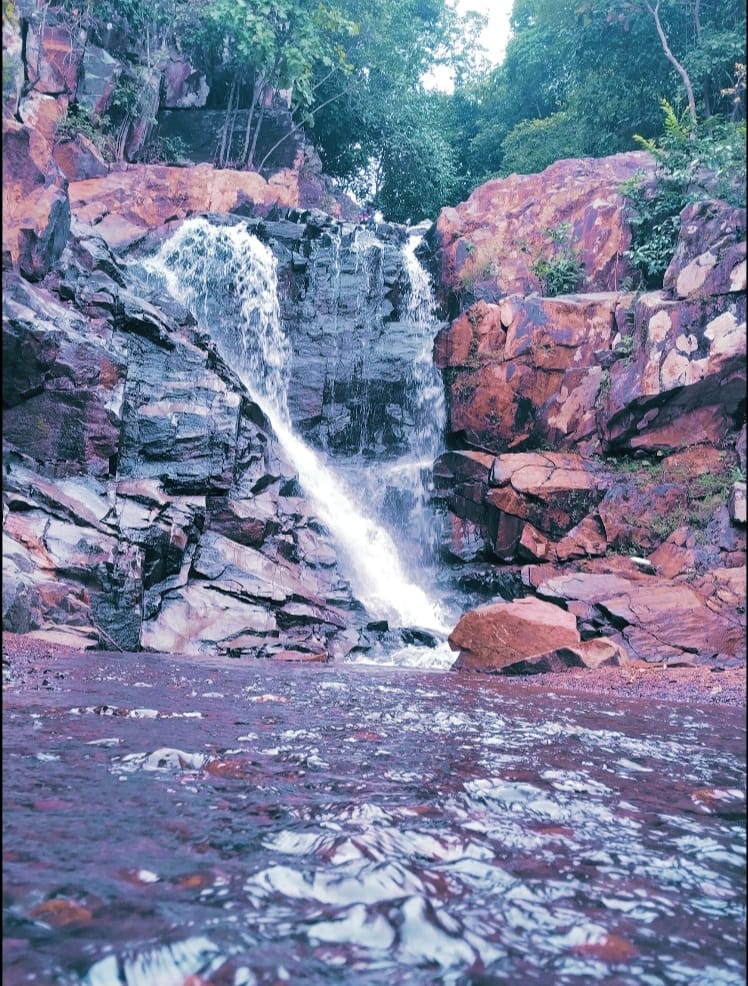
When the rains arrive, the land exhales. Forests rustle awake, and waterfalls brim again. Asurghaty, barely twenty minutes from Ama Kutir, roars through its gorge, mist rising from the cliffs. Kandidhara, about fifty minutes away, falls in a sharp silver stream, its name echoing the blade it resembles. Innumerable smaller cascades thread the green cover during these wet months. By winter, they quieten, their pools becoming gathering places for festive-season picnics. For locals, the waterfalls are calendars: they announce the rains, the filling of fields, and the season of winter feasts.
The rivers too follow this rhythm. In July they swell, in autumn they shimmer at dusk, and in summer they shrink to playful trickles where children bathe and cattle rest. They feed fields that turn from watery mirrors to green waves to golden harvests. Life here is measured by crops, cattle and festivals: Sohrai (festival honoring cattles), with its painted walls; Makar Sankranti, leading into Mage Porob with song and dance; and the weekly haats, whose energy rises and falls with the season.
Even the forests carry their own cycle. In spring the Simuli trees burn red with flowers. In summer, mahua drops sweet on the forest floor. Sacred groves, which the forest and fields have, hold rituals that remind us that generations have come and gone and nothing here is static, everything moves with time.
For travellers, Ama Kutir is not about fixed sights but about entering this rhythm. To stand by Asurghaty in the rains, to walk a field at dusk, to sit beside a river in October; these are not attractions, but moments of quiet that belong to the land’s own calendar.
At Ama Kutir, this rhythm is home. We do not offer spectacle; we offer a window into peace, the kind that comes when waterfalls, rivers, forests, and festivals are seen not as separate things, but as one living whole.
– Anubhav
“Here dawn breaks with temple bells,
the fragrance of flowers fills the breeze,
villages wake to simple joys,
and life flows in rhythm with the seasons.”
Leave a Reply